San Antonio Addiction Treatment: The Power of Alumni Networks
Recovery lasts longer than a therapy remain, and for people reconstructing their lives in San Antonio, what happens after discharge frequently matters most. The appropriate graduates network expands a person's safety net, anchors them in the neighborhood's rhythms, and maintains the momentum of early victories from stalling. I have viewed graduates who when white-knuckled their very first week out later sponsor beginners, hire each various other, and arrange river clean-up days after hefty rains. That arc does not take place by accident. It takes style, uniformity, and a neighborhood lens that fits the truths of addiction treatment in San Antonio.
This city has its very own healing structure. Energetic army and professionals share area with friendliness employees on odd changes. Household ties run deep throughout the West Side, the South Side, and capital Nation commuters that travel in and out for care. Feast season can be a minefield, so can rodeo weeks, Spurs playoff runs, and spring celebration calendars that fill up every weekend. When alumni efforts show those real-world touchpoints, they move from nice-to-have to essential.
What a graduates network in fact is
Strip away the buzzwords and an alumni network is a structured method to keep individuals connected to healthy peers and solutions after official discharge. It functions best when it mixes three elements:
- Warm relationships built during therapy that carry forward in day-to-day life.
- Accessible touchpoints that fit different routines and stages of recovery.
- A light clinical back, solid on limits and recommendations, not treatment disguised as social hour.
In method, that can resemble text check-ins from a peer lead, coffee meetups near army bases, quarterly family education and learning nights in bilingual formats, job-skills workshops in partnership with local companies, and service projects that provide objective and pride. Inside a solid network, graduates can relocate from obtaining support to supplying it, which commonly notes a transforming factor in their very own sobriety.
Why graduates work, not simply theoretically but on the ground
The science behind continuing care is simple. Substance usage conditions change incentive paths and tension actions, and those adjustments do not normalize in 30 or 60 days. Recurring accountability and positive support, specifically from peers that "obtain it," lower the danger that stress or exposure will certainly bring about old behaviors. Shared aid teams and recuperation neighborhood organizations add protective layers referred to as recuperation resources, the consolidated personal, social, and community resources an individual can attract upon.
On the ground, I see 4 systems at play:
Identity shift. Grads reframe from "client" to "alum who helps." That identification is sticky. When a person is scheduled to co-facilitate a newbie positioning on Tuesday, they are much less likely to isolate all weekend.
Early advising system. Normal touches reveal small adjustments prior to they end up being situations. One missed phone call might be nothing. Three missed out on calls with silent social feeds and an uncharacteristic reason can cue a same-day wellness reach-out or an in-person browse through if approval and safety and security plans allow.
Micro-communities. Individuals need greater than a space of strangers. Veterans gravitate to every other. Dining establishment personnel bond over late-night desires after dual changes. Young moms and dads swap hacks for kid temper tantrums and sleeplessness. Excellent networks build subgroups intentionally.
Concrete chance. Recuperation speaks louder when it pays a bill and gets you home by dinnertime. Graduates job boards, instructions, and college enrollment aid transform a person's daily math.
Some request for difficult numbers. You will certainly find large ranges in the literature, and regression is complicated. What corresponds, throughout settings, is that involvement after discharge correlates with much better retention in outpatient solutions, higher rates of conference participation, and less unplanned readmissions. Programs that buy alumni sustain also report more powerful word-of-mouth and more steady census, not due to the fact that individuals cycle back, yet since grads refer friends.
The San Antonio context matters
Addiction therapy in San Antonio has toughness that graduates programs can magnify. Armed forces culture prizes system cohesion, so friend systems and service-oriented occasions resonate. Belief neighborhoods are durable, which means Sunday morning circles and weeknight Celebrate Healing groups have natural hosts. The culinary and nightlife scene is lively, so triggers are anywhere on weekends, yet parks and greenways use sober spaces for movement and sunlight.
Transportation is usually the pinch factor. VIA buses cover much of the city, however transfer times can stretch a 30-minute meeting into a two-hour round trip. Gas cards, rideshares organized with a sober planner, or revolving neighborhood-based meetups solve that. On the borders, from Boerne to Seguin, telehealth bridges distance. A crossbreed graduates version works well right here: one week on Zoom for a lunch-hour check-in, next week in person at a centrally located community center or a church hall with childcare space.
Cultural fluency issues as much as logistics. Bilingual facilitators eliminate rubbing. Food needs to match the crowd, not a common platter. You will keep extra alumni if the potluck includes arroz con pollo alongside veggie trays, and if a facilitator understands that Feast parades need a prevention strategy discussed long prior to cascarón confetti strikes the street.
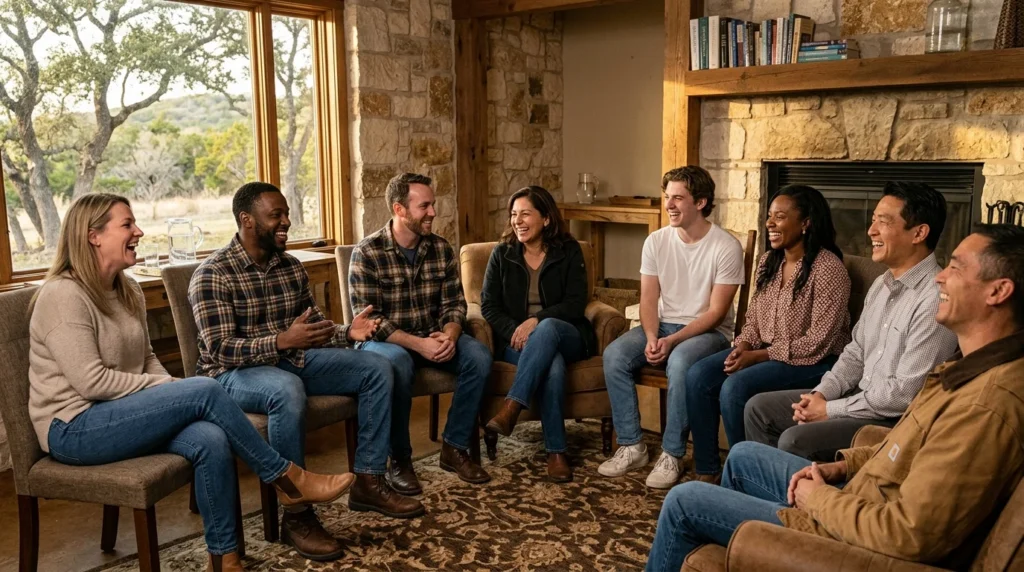
What solid alumni networks do differently
I watch for a handful of layout options that separate long lasting networks from those that discolor:
Continuity of partnerships. The same therapist or peer support professional that guided very early discharge planning appears at the very first alumni touchpoint. Familiar faces transform "I ought to go" into "I will certainly go."
A consent-driven information backbone. Graduates offer clear authorization for exactly how they want to be gotten in touch with, by whom, and what happens if they go silent. HIPAA-compliant systems log communications without creeping into surveillance. When somebody asks for a new beginning with a brand-new number, team treat it like a handoff, not a loss.
Multiple doors in. Not everyone warms to a 12-step style. Great programs use SMART Recuperation, Refuge Healing, faith-based circles, and non-meeting activities like treking groups, art evenings, and yoga exercise at dawn on the River Stroll. Choice builds dignity.
Role clearness. Alumni organizers are not specialists, and coffee with a peer lead is not a scientific session. When needs surpass a peer scope, recommendations to outpatient clinicians or psychiatry happen quickly, ideally within 48 hours.
Family addition. San Antonio households show up, in some cases loudly. Networks for households, with limits, reduce triangulation and maintain home settings safer.
A day-in-the-life snapshot
Marcus, an Air Force expert from Lackland, completed a 45-day program with strong injury assistance. At discharge, he fulfilled Roy, a peer organizer and previous infantry NCO. They set a routine: Monday message check, Wednesday evening gym meetup on the South Side, Saturday early morning veteran coffee run. Within two weeks, Marcus signed up with a solution task painting a community center near Harlandale. He switched numbers with two other veterinarians, and they began an informal team conversation that became his 2 a.m. Breaker during harsh nights. When a VA benefits problem endangered his rent, the graduates workplace walked him into a lawful aid clinic. Six months later, he co-hosted the newcomers table at a bbq held after a graduates softball game in McAllister Park. That change from receiver to provider mattered as high as his treatment did.
Elena, a solitary mother working hotel housekeeping near the River Stroll, had various restrictions. She needed bilingual support, daytime check-ins, and child care. Her graduates pathway went through a Tuesday midday Zoom in Spanish and a Saturday morning park meetup with a volunteer managing the play ground. When Carnival season began, her team built a plan: adhere to family-friendly events, particular exit strategies if food cravings increased, and a rideshare budget due to the fact that a two-bus transfer after dark felt dangerous. The plan maintained her anchored when coworkers welcomed her out after shifts during a high-trigger week.
Two people, two very various alumni arcs, one backbone: sensible assistance, choice, and constant outreach.
The initially 90 days after discharge
If a program gets one home window to construct practices that last, it is the first three months. I encourage setting a foreseeable tempo that keeps care noticeable without smothering freedom. An easy structure:
- Day 1 to 3: Personal call or message from the appointed peer, not a generic blast. Validate meeting choices, troubleshoot transport, and ask about the initial rest at home.
- Week 1 to 2: In-person meetup at a familiar area. If required, a staff member participates in the very first external meeting with the alum.
- Day 30: Testimonial routines. Present a micro-role, such as welcoming novices at an alumni conference or setting up chairs.
- Day 60: Abilities concentrate. Host a job-readiness or budgeting session. Track whether the alum has a medical care appointment and any kind of specialist follow-ups.
- Day 90: Change to a sustainable rhythm. Confirm that natural assistances remain in location, and file choices for just how and when to connect next.
This is just one of the two lists allowed. It prevents a stiff medical feeling and helps planners relocate with objective. Importantly, it leaves room for nuance. Some individuals desire daily get in touch with for some time. Others choose an once a week message and a standing Saturday leave the Goal Reach.
Boundaries and safety without the stigma
Good graduates networks equilibrium heat with guardrails. Three problems show up repeatedly.
High-risk events. San Antonio has months when alcohol and celebration culture are almost everywhere. Alumni groups should publish a seasonal schedule with alternative occasions, experiences, and pal systems. If someone plans to attend a trigger-heavy celebration, personnel can practice refusal scripts, plan early exits, and recognize a call that detects the second ring.
Medication and co-occurring treatment. For people on medicine for opioid usage disorder or with psychiatric prescriptions, graduates coordinators maintain an upgraded resource map and normalized language. "Did you get your refill?" needs https://israelizia128.terracolumn.com/posts/texas-addiction-treatment-for-opioid-usage-disorder-what-works to sound like "Did you bring water?" not "Are you still certified?" Shaming prices lives.
Romance and dating within the network. This is delicate. Blanket bans ignore humanity, and anything goes develops disturbance. Clear, type standards aid: protect early healing, time out on dating till an enroller or specialist agrees, and ask for a personal conversation if connections complicate a team dynamic. Team ought to be ready with sources to take care of problems without public spectacle.
Measuring what matters, not simply what is easy
Programs love control panels. Vanity metrics do not keep people sober. Focus on signals that link to outcomes and respect privacy.
Engagement depth. Beyond matters of participants, track the spread of duties. How many alumni hold micro-roles like setting up chairs, co-facilitating, or inviting novices? Extra functions, even more roots.
Recovery capital pens. Real estate security, work or education, primary care connection, and two called sober assistances. These are not checkboxes to please funders, they are the foundation of less chaotic lives.
Warm handoffs. Time from identified requirement to service connection. If a person asks for injury treatment on a Friday and sees somebody within a week, that is a win. If it takes 3 weeks, expect dropout.
Re-engagement courses. When individuals go back to use, exactly how quickly can the network welcome them without embarassment and with alternatives? A same-day strategy decreases obstacles to re-entry into outpatient care or higher levels of support.
Confidentiality is non-negotiable. Aggregate fads are great to show to management. Individual stories call for authorization, and information lives in a system created for health and wellness information, not in individual phones.
Funding and sustainability in Texas
Addiction treatment Texas wide has a jumble of payers, from industrial insurance policy to Medicaid, the VA, area funds, and self-pay. Alumni shows commonly falls between budget lines. Lasting versions make use of numerous resources:
Operational margin. Programs that understand life time value include graduates operate in standard spending plans because healthier grads lower readmissions, lawful crises, and unsettled balances.
Grants. Area and state grants, in addition to personal structures, will certainly money community-based recovery supports if you can show reach and equity. Bilingual solutions, country gain access to, and veteran-specific paths straighten with numerous funders' priorities.
Employer collaborations. Port San Antonio business, building companies, and friendliness teams need dependable hires. Alumni employment pipelines with training and drug-testing methods can be co-funded when agreements safeguard employee self-respect and safety.
Volunteer energy with framework. Graduates intend to repay. Purchase training to convert a good reputation right into regular solution. A two-hour orientation on borders, discretion, and dilemma rise produces volunteers who assist without producing liability.
Integrating with the bigger recovery ecosystem
No graduates network prospers alone. In San Antonio, cooperation defeats competition.
Mutual help groups. Coordinate calendars with AA, NA, SMART Recovery, Commemorate Recuperation, and Sanctuary Recuperation across areas. Avoid organizing alumni evenings opposite a strong existing meeting. Deal adventures between them.
Recovery community organizations. Partner with organizations that organize drop-in spaces, work fairs, and naloxone training. Share space, do not change it.
Healthcare. Construct channels with primary care centers, behavior wellness providers, and dental clinics that accept Medicaid and sliding-scale people. A broke tooth can torpedo a task meeting, and unattended discomfort derails soberness fast.
Justice system touchpoints. Numerous graduates have pending instances or probation. Liaise with specialized courts to line up schedules and record progression that counts. If a court suches as to see a particular format of attendance logs, meet that requirement without transforming recovery right into a checkmark race.
Faith communities. When invited, location alumni groups in church halls with clear borders. Some individuals find toughness there. Others prefer secular rooms. Both should exist without judgment.
Technology that aids without taking over
The ideal tech is unseen and helpful. A HIPAA-compliant messaging system, group video clip that does not problem on low bandwidth, and an easy CRM to log calls are enough. Automated nudges can fill spaces, however graduates should never feel spammed. Authorization displays ought to be plain English, illegal thickets. For rural counties that feed into San Antonio programs, telehealth groups decrease isolation and offer on-ramps for individuals who can not travel midweek.
One small tool that pays huge returns is a trips center. A coordinator can approve rideshares within set budget plans, track use, and shift funds to gas cards when required. I have actually seen participation double for specific teams when transportation rubbing dropped.
Common challenges and just how to avoid them
A couple of patterns have a tendency to sink graduates efforts.
All heart, no plan. Warmth without framework wear out team and sheds individuals in the splits. A schedule set 60 days in advance, clear functions, and recorded handoffs keep momentum.
Clinician overreach. When therapy splashes right into graduates area, individuals feel taken care of. Keep the clinical line crisp and refer decisively.
One-size-fits-all programs. A 7 p.m. Fulfilling near the Pearl will certainly not serve night-shift employees or parents on the South Side. Vary time, area, and style. Assess quarterly and relocate events that underperform.
Data hoarding. If program leaders require to accept every adjustment and see every statistics, organizers quit innovating. Establish target end results, not micromanagement.
Hero volunteers without training. All-natural leaders can likewise press borders. Give them devices and supervision, or you will certainly invest your weekends producing fires.
A sensible starter set for programs constructing graduates support
If you run addiction treatment in San Antonio and want to raise alumni work, a simple starter set can move you from concept to activity in 30 days.
- Name a lead. One point person with authority to routine, spend a modest budget, and coordinate throughout departments.
- Map the city. Identify three accessible locations on bus lines, one southern, one main, one north. Confirm bilingual capacity.
- Set a 90-day schedule. Alternative in-person and virtual. Publish extensively at discharge and on social networks graduates already use.
- Build reference ladders. Fast pathways for psychological health, FLOOR COVERING, housing, and work. Put calls in a one-page sheet graduates can save to their phone.
- Launch pilot functions. Greeter, configuration lead, adventures organizer, newbie friend. Train in a one-hour session. Debrief monthly.
This is the second and last list. It remains tight deliberately. The majority of programs have the bones to do this now if they bless one staff member to keep up it.
The human piece you can not fake
The strongest alumni networks feel like belonging, not obligation. I keep in mind a Saturday morning by the Goal San José trailhead after a heavy rain. The group planned a cleanup and a short walk. Individuals turned up with gloves, children in strollers, and a couple of nervous newbies. Somebody brewed café de olla. An alum celebrated 18 months and quietly pointed out a difficult week at the workplace. Another used to sit on the porch later that day if yearnings spiked. Nobody provided a speech. They simply did the following best point with each other. That morning mattered as much as any kind of treatment session.
San Antonio can be a tough healing landscape with its events, food, and night life woven into day-to-day live. It is also a generous one. Alumni networks that respect the city's speed and diversity assist people build sturdy, average lives. And normal is undervalued. It is the text that gets the answer at 6 a.m., the job that transfers on Friday, the little league video game on Saturday, the conference on Sunday, and the good friend who notifications if you go quiet on Monday.
For any individual thinking about addiction treatment in San Antonio, ask programs just how they take care of life after discharge. Listen for details, not slogans. Who will certainly text you your first week home. Where will certainly you meet if your automobile remains in the store. How they welcome you back if you stumble. The power of alumni networks hinges on those specifics. It is the distinction in between a graduation day and a brand-new means of living.